
New olive varieties could boost production and quality in North Cyprus
Agricultural researchers in North Cyprus have identified several promising olive varieties that could help farmers increase production, improve olive oil quality and make better use of the island’s dry climate.
By Ibrahim Diran (TAK)
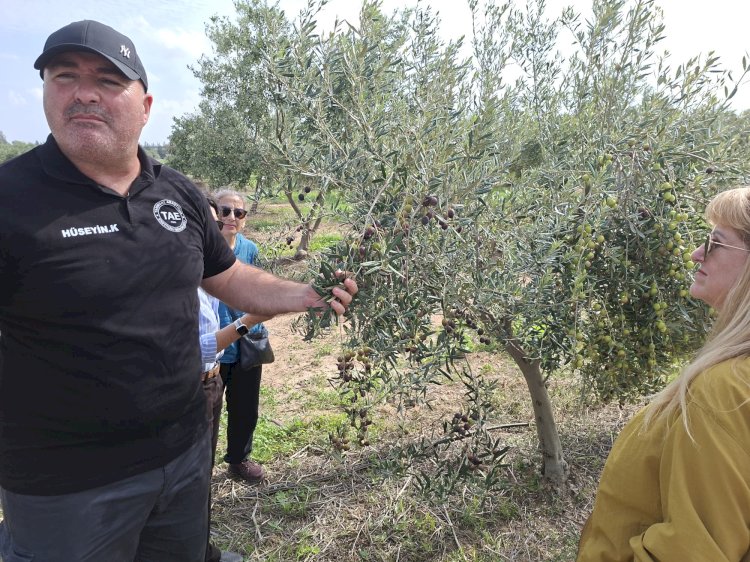
The findings were presented at the Türkmenköy Agricultural Research Institute, where scientists have been testing 21 olive varieties for more than a decade to determine which are best suited to local growing conditions.
The experimental olive grove, established in 2014, has been used to compare varieties according to their productivity, oil content, suitability for table olives and ability to withstand drought.
Agricultural Research Institute Director Cem Karaca said the results demonstrated the importance of long-term research before farmers invested in new varieties.
He explained that the programme began in 2010 and was now producing valuable information that could help growers avoid costly mistakes.
Agricultural engineer Hüseyin Karanfil said one of the project's most significant achievements was the official registration of the island's traditional olive variety, known as Ada Yerlisi, in 2024.
Researchers initially studied the genetic characteristics of locally grown olives before introducing 20 additional varieties, mainly selected from Türkiye, for comparison.
Karanfil warned that choosing the wrong olive variety could result in substantial financial losses, as trees can take years to reach their full productive potential.
The research also challenged the belief that varieties which begin producing fruit later are necessarily less productive.
According to Karanfil, the traditional Cypriot olive initially developed more slowly than some imported varieties but has shown strong performance in recent years.
To reflect the island's natural conditions, researchers deliberately restricted irrigation, watering some plots weekly and others only once every three weeks.
With around 90 to 95 per cent of the experimental trees producing olives this year, the institute decided to open the research grove to visitors.
Cyprus climate could produce premium olive oil
Researchers also highlighted the potential for Cyprus to produce high-quality olive oil with elevated levels of polyphenols, natural antioxidant compounds associated with both flavour and potential health benefits.
However, he pointed out that local laboratories currently lack the equipment needed to measure polyphenol levels, although facilities are available to test oil acidity and detect adulteration.
He also raised concerns about olive oil processing practices in North Cyprus.
According to Karanfil, high-quality oil depends on harvesting olives before they become fully ripe and carefully controlling temperatures and processing times during extraction.
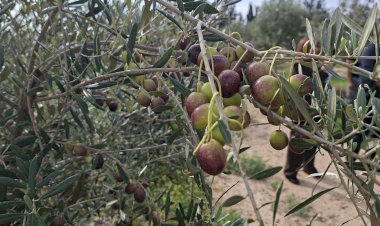
He said harvesting green olives generally produces less oil but can result in higher polyphenol levels and better quality.
He recommended harvesting no later than the stage when the olives begin developing black spots.
Most promising varieties identified
Among the varieties showing encouraging results were Gemlik, Sarı Ulak, Domat, Girit, Uslu, Çilli, Memecik, Sinop 4-14 and Eğri Burun.
Some demonstrated high yields, while others were particularly suitable for table olives, oil production or drought conditions.
The Girit variety stood out for its drought tolerance, while Uslu and Çilli showed consistent annual production. Sinop 4-14 also demonstrated strong yields.
Researchers have submitted requests to the relevant ministry to allow the import of saplings from the most promising varieties.
A full scientific report will be prepared once the study is completed.
The research programme is supported by Türkiye's Development and Economic Cooperation Office and aims to help North Cyprus develop a more productive and competitive olive-growing sector.