Erhürman optimistic about outcome of UN-led trilateral meeting
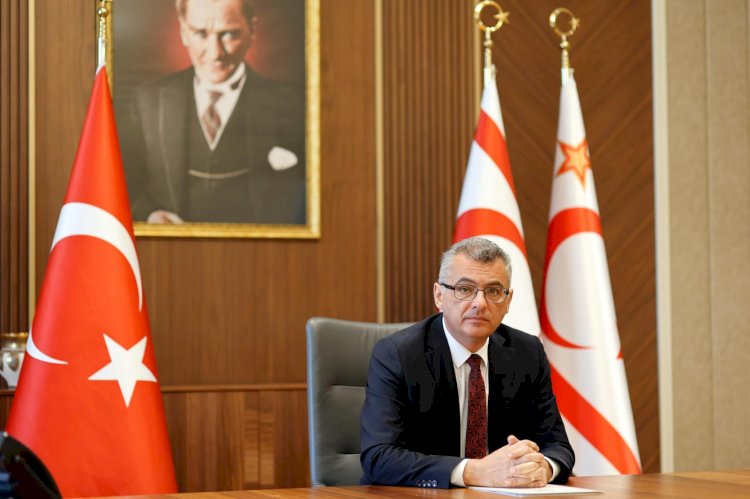
Speaking on Genç TV’s Yüz Yüze programme, hosted by Cem Kar, President Erhürman outlined his approach to the Cyprus issue, relations with Türkiye and the conditions necessary for a successful negotiation process.
He stressed that Turkish Cypriots would never accept minority status and that any settlement must recognise the political equality of the island’s two communities.
Political equality remains the priority
Erhürman said political equality was the first and most important element of his proposed negotiation methodology.
He argued that previous attempts to resolve the Cyprus problem had failed partly because fundamental questions, including political equality and rotating presidency, had been left unresolved until the final stages of negotiations.
Referring to rotating presidency, he warned against repeating the mistakes of earlier talks.
“If this is going to be brought before us on the final night, there is no point in wasting our time,” he said.
Erhürman insisted that political equality was not a matter on which the Turkish Cypriot side could compromise.
“You are either politically equal or you are a minority. We will not become a minority. Without the acceptance of political equality, this process will not succeed,” he said.
UN envoy's position welcomed
The President also commented on recent remarks by UN Secretary-General's Personal Envoy María Ángela Holguín, who questioned whether his proposals constituted a formal negotiation methodology.
Erhürman said the terminology was less important than the substance of the approach.
He welcomed Holguín's emphasis on resolving political equality and rotating presidency before moving to other negotiating chapters.
Even if the UN envoy did not describe his proposals as a methodology, Erhürman said her decision to prioritise these issues was consistent with his own position.
He suggested that Holguín's reluctance to use the term might have resulted from objections raised by the Greek Cypriot side.
Constitution does not prevent a federal settlement
Erhürman also addressed questions about the TRNC Constitution and the Declaration of Independence, saying neither prevented efforts to reach a federal settlement.
He declined to describe former President Ersin Tatar's two-state policy as unconstitutional.
As President and a legal expert, Erhürman said he was obliged to respect the Constitution and the Declaration of Independence, which envisaged continued efforts towards a lasting settlement.
He noted that the Declaration specifically stated that the establishment of the TRNC did not prevent a federal solution and could facilitate such an agreement.
Despite the disappointments of the 2004 Annan Plan referendum and the collapse of negotiations at Crans-Montana in 2017, he said Turkish Cypriots had maintained their willingness to seek a settlement.
“We will seek a solution under the auspices of the United Nations,” he said.
Türkiye and Turkish Cypriots share common concerns
Discussing relations with Ankara, Erhürman said consultations with Türkiye were continuing and that both sides shared the same fundamental concerns regarding the Cyprus problem.
He argued that the central obstacle to a settlement had been the Greek Cypriot leadership's unwillingness to share political power and the island's resources.
According to Erhürman, a clear commitment to power-sharing from the beginning of a new process would help establish confidence that negotiations could produce a different result this time.
He also indicated that the 19-point proposal presented by Greek Cypriot leader Nikos Christodoulides had not been rejected in its entirety.
'You cannot confine me to the negotiating table'
Erhürman rejected the suggestion that Turkish Cypriot diplomatic activity should be suspended while negotiations continued.
He said Christodoulides was free to pursue agreements with countries such as Israel and Egypt, and that the Turkish Cypriot side was equally entitled to develop its international relationships.
“If Mr Christodoulides can leave the negotiating table and pursue his business, I cannot be expected to remain seated there waiting for him to return. That is not how the world works,” he said.
He cited his participation in meetings of the Organisation of Turkic States as an example of diplomatic engagement that should continue alongside the peace process.
Erhürman stressed that Turkish Cypriot rights and interests would be defended both at the negotiating table and internationally.
A fundamental disagreement over status
The President also referred to former Greek Cypriot leader Tassos Papadopoulos and his position following the signing of Cyprus's European Union accession agreement.
He said Papadopoulos's insistence on preserving the existing state structure illustrated what he regarded as the fundamental disagreement between the two sides.
Erhürman argued that any approach treating Greek Cypriots as the sole holders of state authority would inevitably reduce Turkish Cypriots to minority status.
He maintained that a sustainable settlement required recognition of the island's two politically equal communities.
Despite the challenges ahead, Erhürman expressed cautious optimism about the anticipated trilateral meeting involving the two leaders and UN Secretary-General António Guterres.
He said he considered the possibility of achieving a result greater than the possibility of leaving the meeting without progress, while making clear that any meaningful breakthrough would depend on addressing the fundamental questions of political equality and power-sharing.