Fidan’s Cyprus visit and Erhürman’s silence: Is something changing behind the scenes?
Analysis | Cyprus Today
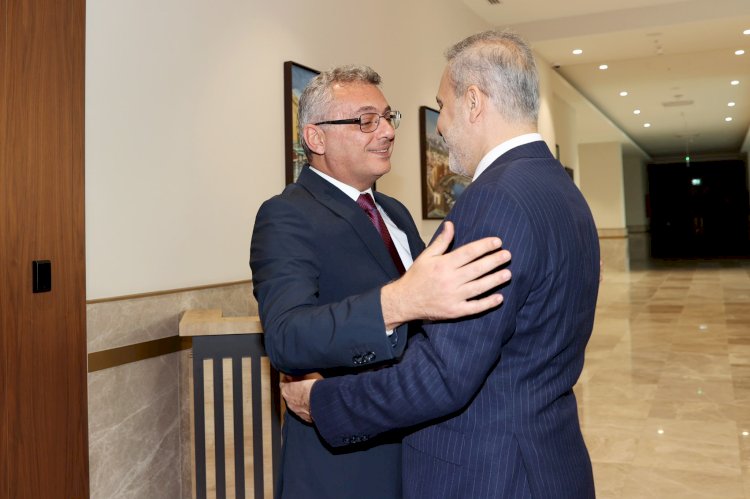
Fidan arrived in Northern Cyprus on Friday for talks with President Tufan Erhürman, Prime Minister Ünal Üstel and Foreign Minister Tahsin Ertuğruloğlu, just three days before a potentially important meeting between the island’s two leaders and UN envoy María Ángela Holguín Cuéllar.
Officially, the visit concerns bilateral relations and the latest developments in the Cyprus issue. However, its timing suggests that more may be happening behind the scenes.
For several days, Holguín has been conducting intensive shuttle diplomacy, meeting both leaders repeatedly and seeking answers to specific questions.
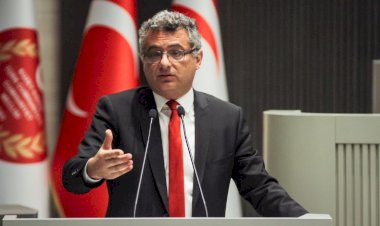
Erhürman, meanwhile, has remained remarkably quiet.
His silence appears consistent with the diplomatic blackout he previously advocated, an approach intended to prevent sensitive discussions from being conducted through the media.
Greek Cypriot leader Nikos Christodoulides has adopted a different approach, speaking publicly about the possibility of positive developments and even suggesting that announcements could come before Monday's meeting.
But the most intriguing development has come from Ankara.
Earlier this week, Holguín made an unusual visit to Türkiye's ambassador in Lefkoşa, Ali Murat Başçeri.
The meeting was sufficiently unexpected to cause irritation in the Greek Cypriot administration.
Holguín subsequently explained that Turkish Deputy Foreign Minister Mehmet Kemal Bozay had sent her a message through Başçeri. She visited the embassy to receive it and later informed Christodoulides of its contents.
The substance of that message has not been disclosed.
Nevertheless, the fact that Ankara chose to communicate through its ambassador, followed almost immediately by Fidan's visit, invites questions about whether Türkiye is helping prepare the ground for a diplomatic development.
Four possible explanations
One possibility is that the diplomatic activity is centred on an agreement to open four new crossing points.
Reports in the Greek Cypriot and Turkish Cypriot press suggest that discussions have intensified over crossings at Mia Milia (Haspolat), Louroujina (Akıncılar), the Athienou–Aglantzia route and a possible connection in the Lefka region.
An agreement could provide the confidence-building breakthrough Holguín needs to move towards a larger international meeting involving the guarantor powers.
A second possibility is that Ankara is preparing to support a more substantial diplomatic initiative, although that would not necessarily mean abandoning its declared two-state policy.
Erhürman has insisted that any renewed negotiations must recognise political equality, have a clear methodology and avoid another open-ended process that ends in failure.
Fidan's visit could therefore be intended to establish precisely what room exists for movement without either Ankara or the Turkish Cypriot leadership compromising their fundamental positions.
A third interpretation concerns Türkiye's relationship with the European Union.
The European Commission's latest report on Türkiye has again placed Cyprus among the obstacles to closer relations between Ankara and Brussels.
Some observers may see the present diplomatic activity as part of a wider attempt to improve the political atmosphere surrounding EU–Türkiye relations.
There is, however, no confirmed evidence of a direct connection.
A more speculative possibility concerns Türkiye's nomination of Feridun Sinirlioğlu for the position of UN Secretary-General.
His candidacy will require support within the UN Security Council, including from its five permanent members.
Whether Ankara's wider diplomatic priorities have any bearing on the latest Cyprus contacts remains unknown. It would be premature to suggest that concessions on Cyprus are being discussed in exchange for international support.
Why the silence matters
Perhaps the most revealing aspect of the present situation is the contrast between the two Cypriot leaders.
Christodoulides has chosen to communicate optimism publicly, while Erhürman has apparently decided that the less he says, the better.
That silence should not automatically be interpreted as a lack of progress.
It may instead suggest that discussions have reached a stage where public statements could complicate delicate negotiations.
Equally, the absence of information leaves considerable room for speculation.
The key question is whether Monday's meeting will produce an agreement on practical measures or establish a more ambitious political timetable.
New crossing points would be a meaningful achievement, particularly for communities whose daily lives are affected by the island's division. But they would not, by themselves, indicate agreement on the much more difficult issues of sovereignty, political equality and the basis of a settlement.
For now, the evidence points towards a serious effort to produce something tangible before the UN attempts to take the process further.
The involvement of Ankara, the unusual route through which its message was delivered and the arrival of its foreign minister all suggest that the current diplomatic activity deserves closer attention than another routine round of meetings.
Whether it marks the beginning of a new chapter in the Cyprus issue or simply another attempt to manage the longstanding deadlock remains to be seen.
One thing is increasingly difficult to ignore: unusual diplomatic moves are taking place, and Monday's meeting may offer the first indication of what they are intended to achieve.