
Economist raises concerns over rising debt and spending in 2027 budget
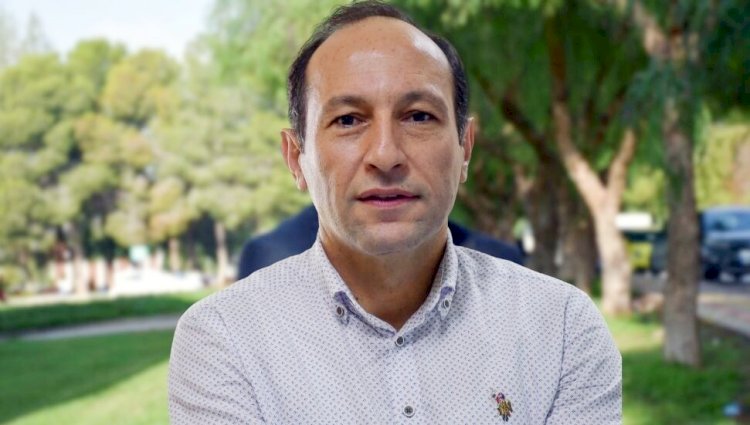
In an assessment shared on social media, Besim examined the budget submitted to Parliament, looking at government income, spending, public investment and financial support from Türkiye.
The proposed budget is 32 per cent larger than the previous year's TL190.6 billion, while the expected deficit has reached TL32.5 billion.
Besim noted that the increase in spending is higher than the government's forecast inflation rate of 26.7 per cent.
Most spending goes on existing commitments
According to Besim, salaries, government transfers and interest payments account for 81 per cent of total spending.
This leaves a relatively small share of the budget available for public investment and new development projects.
He said spending on goods and services is expected to fall by 14 per cent in real terms, after inflation is taken into account, while capital spending is set to decline by 18 per cent.
Locally funded investment will increase by 10 per cent in cash terms, but this represents a real reduction of around 13 per cent when inflation is considered.
Besim said greater investment in infrastructure, production and education would help support long-term economic growth.
Higher borrowing and interest payments
The cost of government borrowing is another important feature of the proposed budget.
Interest payments are expected to rise by 69 per cent and will account for 4.4 per cent of total government spending.
Besim pointed out that domestic public debt increased from TL15.9 billion at the end of 2025 to TL29.5 billion by June 2026.
He also noted that interest payments in 2025 were considerably higher than originally budgeted, reaching TL3.85 billion against an initial allocation of TL1 billion.
He said these figures showed the importance of making realistic estimates for future borrowing costs.
Financial support from Türkiye
The budget also includes increased financial support from Türkiye.
Grants are expected to rise by 24 per cent, while loans will increase by 137 per cent, equivalent to an additional TL3.2 billion.
As a result, loans will make up 19 per cent of financial support from Türkiye, compared with 11 per cent previously.
Besim said this meant borrowing would play a larger role in financing public spending.
He also noted that locally generated income is expected to cover 83.4 per cent of local expenditure, down from 85.5 per cent.
Budget deficit reaches TL32.5 billion
The proposed deficit is higher than estimates published earlier this year.
In July, the government projected a deficit of TL25.7 billion for 2027. This was later revised to TL30.5 billion in its Medium-Term Programme.
The latest budget proposal puts the figure at TL32.5 billion.
Besim said the changes reflected the difficulties involved in balancing government income and expenditure.
He also recalled that previous financial plans had aimed for a balanced budget in 2026 and a surplus in 2027.
Focus on future growth
Besim said public spending decisions were particularly important for North Cyprus because the country uses the Turkish lira and does not have its own monetary policy.
He noted that the economy grew by 7.3 per cent in 2023 and 8.5 per cent in 2024, showing that economic activity had remained strong in recent years.
However, he said the government needed to ensure that economic growth was supported by sustainable public finances and sufficient investment.
He suggested that greater attention should be given to improving infrastructure, supporting production and developing the workforce.
Besim concluded that the main challenge for the coming years would be managing government spending, controlling borrowing costs and creating more opportunities for long-term economic development.
Related News

GİKAD chair attends global congress
Oct 11, 2026
Turkish Vice President Cevdet Yılmaz to visit TRNC
Sep 17, 2026
Property, land tax bills up 30%
Feb 15, 2021