Report warns Israel’s regional partnerships aim to contain Türkiye
The report, titled The Anatomy of Israeli Expansionism, examines the historical, ideological, political and military foundations of Israeli policies, their implications for regional security and the options available to Ankara.
It describes the Eastern Mediterranean as an increasingly established arena of strategic competition. According to the report, Israel’s partnerships with Greece and the Greek Cypriot administration have expanded into a wider network involving countries including the United Arab Emirates and India.
These arrangements, covering defence, technology and connectivity, seek to restrict Türkiye’s room for manoeuvre and make closer relations with Ankara more costly for other countries, the report argues.
In his foreword, academy president Prof Talha Köse said Israeli actions in Gaza, which he described as genocide, alongside what he termed administrative annexation in the West Bank and expansionism in Lebanon and Syria, were contributing to international instability.
He argued that Israel’s approach undermined prospects for a two-state solution to the Israeli-Palestinian conflict.
Prof Köse contrasted Türkiye’s emphasis on strengthening neighbouring states’ sovereignty, territorial integrity and institutions with an Israeli security approach that, he said, depended on surrounding countries remaining weak, fragmented and vulnerable to intervention.
The report argues that Israeli expansionist policies extend beyond military operations to include territorial, legal, administrative and demographic measures.
It says these policies have become embedded in state institutions and legislation, warning that a change of government alone might not be sufficient to reverse them.
The study also examines the growing influence of the radical right and settler movements within Israeli politics, ministries and the bureaucracy.
On military capability, the report says Israel’s technological and operational strength allows it to conduct operations far from its borders, but does not enable it to sustain a prolonged, high-intensity war independently.
It identifies US support as central to Israel’s military endurance, while suggesting that opposition to its actions in Gaza, particularly among younger Americans, creates uncertainty over the future of that support.
The report further argues that short-term military gains have not translated into lasting regional dominance. It suggests Israeli policies could encourage neighbouring countries to seek alternative security partnerships.
For Türkiye, the study recommends strengthening regional states and reducing the institutional and social weaknesses that outside powers could exploit.
It presents the “Terror-Free Türkiye and Terror-Free Region” initiative as part of that approach, arguing that stronger ties between Turkish, Kurdish and Arab communities would make ethnic and social divisions harder to use as instruments of external intervention.
lets favour Turkiye a little
Türkiye’s security concerns highlighted in report on Israeli expansionism
TÜRKİYE’S concerns over attempts to restrict its influence in the Eastern Mediterranean are highlighted in a new report examining Israel’s regional ambitions and its growing partnerships with Greece and the Greek Cypriot administration.
Published by Türkiye’s National Intelligence Academy, The Anatomy of Israeli Expansionism argues that these security, energy and political relationships have developed into a strategy aimed at containing Türkiye.
The report examines the historical, ideological and military foundations of Israeli policies, alongside the risks facing Ankara and possible responses.
Academy president Prof Talha Köse, in his foreword, contrasts Türkiye’s support for neighbouring states’ sovereignty, territorial integrity and stronger institutions with an Israeli security policy that, he argues, benefits from surrounding countries remaining weak and fragmented.
The distinction places regional stability at the centre of Türkiye’s security approach: stronger neighbours and functioning institutions, rather than prolonged conflict and division.
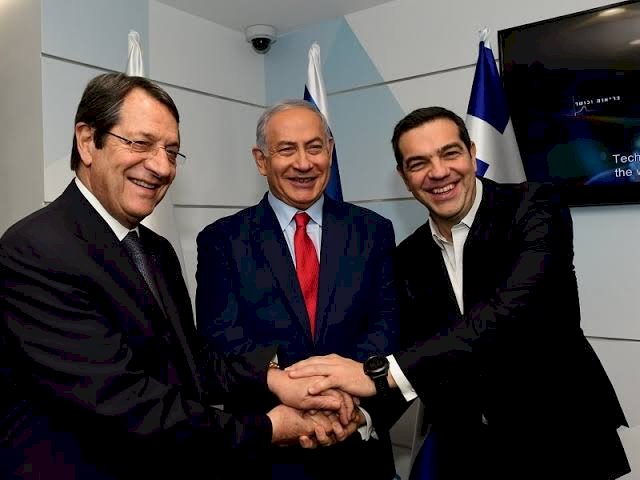
On the Eastern Mediterranean, the report says Israel’s cooperation with Greece and the Greek Cypriot administration has expanded into a broader network involving countries including the United Arab Emirates and India.
Covering defence, technology and connectivity, these arrangements seek to narrow Türkiye’s room for manoeuvre and make closer relations with Ankara more costly for other countries, the study argues.
Its findings underline why Ankara views such partnerships as a strategic concern extending beyond routine cooperation between neighbouring states.
Prof Köse also warned that Israeli actions in Gaza, which he described as genocide, together with what he termed administrative annexation in the West Bank and expansionism in Lebanon and Syria, were contributing to international instability and undermining a two-state solution.
The report argues that these policies cannot be attributed solely to Israel’s current government. Territorial, legal, administrative and demographic measures have become embedded in state structures, it says, meaning a change of government alone might not reverse them.
It also identifies limits to Israel’s military power. While its technological capabilities allow operations far beyond its borders, the report says Israel remains structurally dependent on US support to sustain prolonged, high-intensity warfare.
Short-term military gains have not produced lasting regional dominance, the study argues. Instead, pressure on neighbouring countries could encourage alternative security partnerships.
For Türkiye, the report advocates a response extending beyond military preparedness. Strengthening regional institutions, protecting sovereignty and reducing social divisions are presented as essential to limiting outside intervention.
It describes the “Terror-Free Türkiye and Terror-Free Region” initiative as a means of strengthening ties between Turkish, Kurdish and Arab communities, making their differences harder for external powers to exploit.
For Cyprus, the report’s assessment places renewed attention on the wider consequences of the Greek Cypriot administration’s partnerships with Israel, particularly their implications for Türkiye’s security interests and the regional balance.
Related News

Temperatures to reach 31°C inland
Oct 26, 2026
Dânâ takes Cyprus talks to Brussels
Oct 24, 2026